

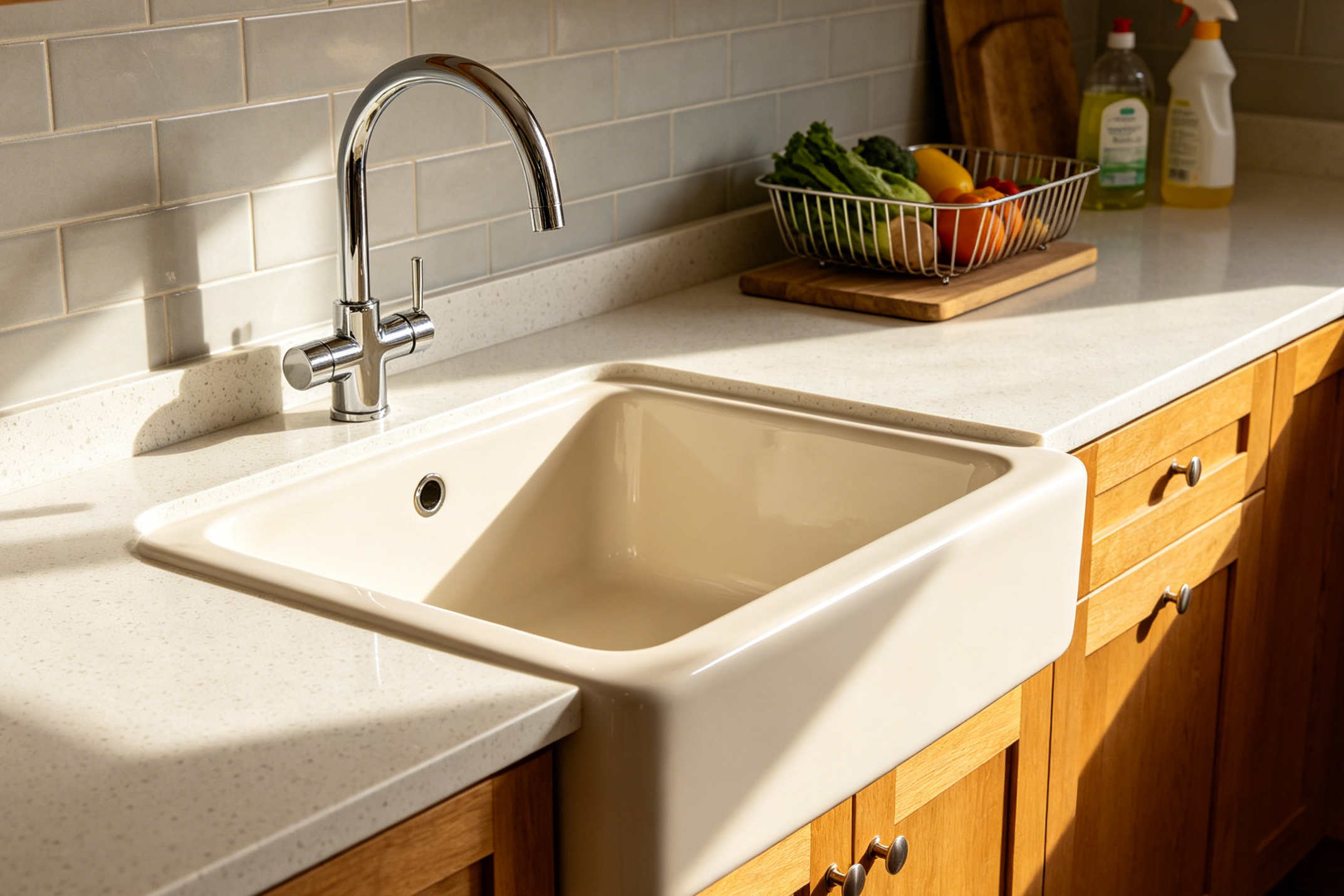
Ceramic sinks look great and last a long time—but they can still crack. What causes it, and how can you avoid it? Here’s what you need to know.
1. Ceramic Is Strong, But Not Flexible
Most ceramic sinks are made from materials like fireclay or vitreous china. These are formed by firing clay at very high temperatures and applying a protective glaze.
The result is a surface that is:
- Smooth and non-porous
- Resistant to stains and scratches
- Visually clean and durable
However, ceramics also have one key limitation:
👉 It is hard but brittle.
Unlike stainless steel, ceramic does not flex under pressure. This means it can handle daily use well, but sudden force or stress can lead to cracks.
2. Heavy Impact Is the Leading Cause
The most common reason for ceramic sink damage is impact from heavy objects.
Typical situations include:
- Dropping heavy cookware like cast-iron pans
- Hitting the sink edge with solid kitchen tools
- Accidentally knocking hard objects against the basin
Even if no damage appears right away, the force can create tiny internal cracks that grow over time.
👉 Compared to metal sinks that may dent, ceramic is much more likely to crack under impact.
3. Sudden Temperature Changes (Thermal Shock)
Ceramic sinks can also be affected by rapid temperature shifts, known as thermal shock.
This often happens when:
- Boiling water is poured into a cold sink
- Cold water is run immediately after hot liquids
- A hot pan is placed directly into the sink
Because ceramic doesn’t expand and contract as evenly as metal, these sudden changes can create internal stress—leading to cracks over time.
4. Poor Installation and Insufficient Support
Installation plays a bigger role than many people realise.
Ceramic sinks—especially farmhouse and undermount styles—are quite heavy. Without proper support:
- Weight may not be evenly distributed
- The sink can shift slightly over time
- Stress points can develop
An uneven cabinet base or weak mounting system can eventually lead to cracking, even without any direct impact.
5. Long-Term Structural Stress
Over time, natural movement in your home can also affect your sink.
Potential issues include:
- Cabinet settling
- Countertop expansion or contraction
- Incorrect cutout size, putting pressure on the edges
Since ceramic lacks flexibility, even small shifts over time can create stress that results in cracks—especially around corners or the drain area.
6. Manufacturing Defects (Less Common)
Although rare, defects during production can make a sink more vulnerable.
These may include:
- Air pockets within the ceramic
- Uneven firing temperatures
- Inconsistent glaze application
These flaws might not be visible at first, but they can weaken the structure and increase the risk of cracking.
👉 That’s why choosing a reliable brand and checking warranty coverage is important.
How to Prevent Ceramic Sink Cracks
While ceramic sinks require a bit more care, a few simple habits can greatly reduce the risk of damage:
- Avoid dropping heavy or sharp objects into the sink
- Use a protective sink grid to absorb impact
- Introduce hot water gradually instead of sudden changes
- Ensure proper installation with solid support
- Do not place extremely hot cookware directly in the sink
Final Thoughts
Ceramic sinks are durable, stylish, and long-lasting—but they are not indestructible.
👉 Most cracks are caused by impact, temperature shock, or improper installation, rather than normal daily use.
With proper care and installation, a high-quality ceramic sink can serve your kitchen or bathroom reliably for many years.